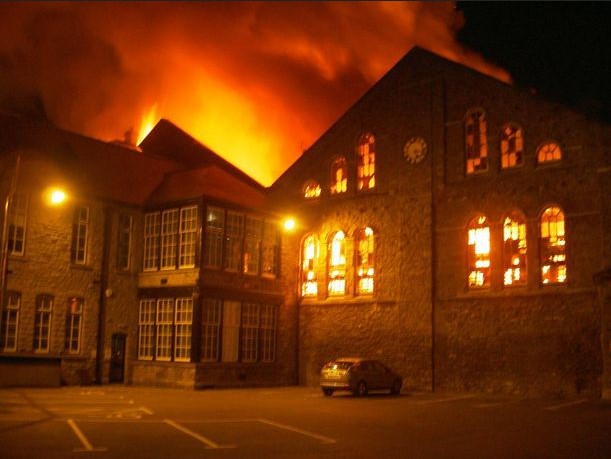
During my years in the UK Fire Service, I saw some of the very best, and the very worst, of people’s behaviour. From two men literally having a brawl on the bonnet of a car we were trying to rescue a casualty from, to the quiet kindness of people towards neighbours who had just lost their homes – and sometimes much more than that – to fire. Sometimes their behaviour made sense and sometimes it didn’t. But it was always fascinating.
What struck me most, though, wasn’t the dramatic moments. It was the everyday, mundane ones.
One of the more interesting things I witnessed again and again was how people rationalise their actions. We would deliver safety advice in person or through media campaigns and people would nod their heads and agree wholeheartedly that yes, they would absolutely do what we suggested. And they would – right up until the moment it inconvenienced them or cost them money. Then they’d go off and do exactly what they wanted to, all the while convincing themselves they were making the perfectly sensible choice. I learned a great deal about unconscious bias and worldview during those years – the invisible lens through which we interpret everything around us and, crucially, everything we do. That lens, I came to understand, is remarkably good at making us look like the hero of our own story, even when the evidence suggests otherwise.
It’s a deeply human trait. We are not nearly as rational as we like to believe. Instead, we are expert storytellers, and the most important story we ever tell is the one we tell ourselves about ourselves.
That ability – or perhaps compulsion – to make sense of our own choices forms a central part of the thematic foundation of Judgement. The story is set aboard ELLE4, an O’Neill cylinder orbiting a plague-devastated Earth, where the surviving population is waiting out the years until Earth becomes habitable again. The antagonists in Judgement are not villains twirling their moustaches and cackling at their own wickedness. They are people who believe, with absolute conviction, that they are doing the right thing. And that is precisely what makes them dangerous.
Because the most consequential errors we make are rarely the ones we agonise over. They are the ones we never question at all.
How “believing we’re doing the right thing” can blind us to the fact that we’re not – and how that misplaced certainty can lead us somewhere we never intended to go – is a question Judgement sits with rather than rushes to answer. It’s a question the Fire Service taught me to take seriously long before I ever put it on the page.
If you want to see how that plays out in the story, sign up to the newsletter and get the first chapter for free.